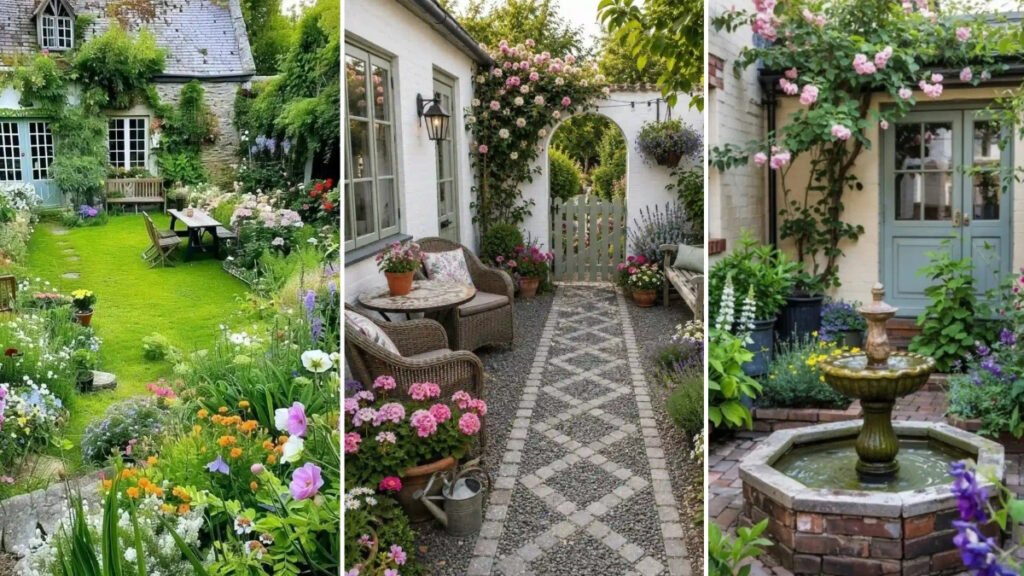
A Tuscan garden can lose its charm when every corner feels too polished or crowded with plants. Without the right balance of sun-warmed stone, soft greenery, and open space, a backyard may feel more busy than inviting.
The appeal of old-world Italian landscapes lies in their simple contrasts: rugged gravel paths, terracotta pots, silver foliage, and deep green evergreens. Yet copying these details without considering climate and drainage can leave plants struggling.
These 18 Tuscan garden ideas show how to build that relaxed, rustic warmth with thoughtful planting, natural materials, and practical choices for your own outdoor space.
The Beautiful Contrast Behind Tuscan Garden Design
– Start with earthy materials: Use warm limestone, weathered terracotta, rustic brick, and pale gravel to create a natural foundation. Their gentle colors make green foliage and flowering plants stand out without overwhelming the garden.
– Layer Mediterranean planting: Combine upright Italian cypress, silvery olive foliage, fragrant rosemary, and purple lavender where climate and growing conditions allow. Different heights and textures create depth, while evergreen plants provide structure beyond summer.
– Let sunlight guide the layout: Lavender and rosemary prefer sunny positions with well-drained soil. In areas with heavy clay, consider raised planting beds or large containers with drainage holes. RHS+1
– Create warmth through simple details: Position oversized terracotta planters near stone steps, soften pathway edges with aromatic herbs, and add a shaded seating area beneath a pergola. Choose locally suitable plants and check their mature sizes before planting.
1. Rustic Stone Pathway and Flowering Pergola
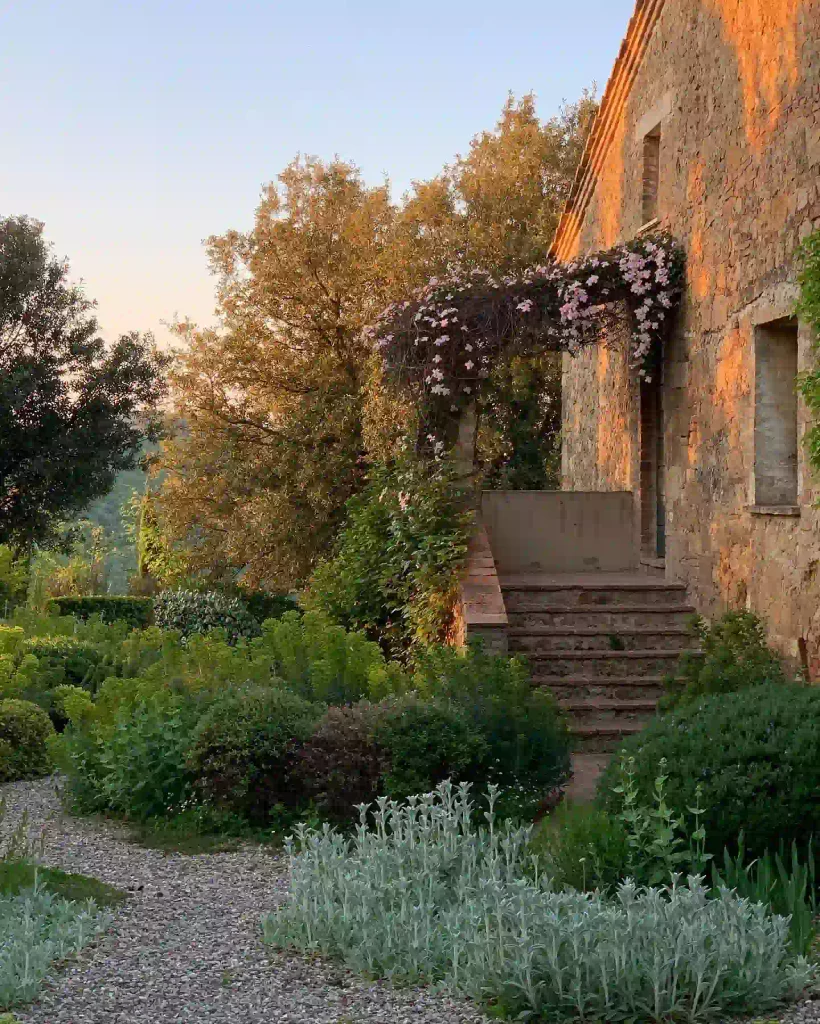
A pale gravel pathway winds through soft silver foliage, rounded green shrubs, and lush perennial planting beside a weathered Tuscan stone farmhouse. Rustic brick steps rise toward a pergola draped in delicate pink climbing flowers, while mature trees glow in the warm evening sunlight.
The contrast between silvery leaves, rich greenery, and golden stone creates the relaxed elegance found in traditional Tuscan garden ideas. Low-growing plants soften the gravel edges, while taller shrubs add depth without hiding the beautiful stonework.
Garden design tip: Recreate this layered look with silver-leaved lamb’s ear, rosemary, and drought-tolerant Mediterranean shrubs suited to your climate. Give sun-loving plants well-drained soil, allow room for mature growth, and keep gravel pathways clear for comfortable walking.
2. Cypress + Gravel Path + Clipped Shrubs

A narrow gravel path leads through a beautifully ordered Tuscan planting scheme, framed by clipped evergreen mounds, silvery foliage, upright cypress trees, and a simple metal pergola that gives the space structure without feeling heavy.
- Why it works: The tall cypress create strong vertical lines, while rounded shrubs and low silver plants soften the path. That contrast gives the garden its calm, old-world rhythm.
- Planting tip: This look depends on repetition. Repeating clipped forms, gravel, and drought-tolerant planting makes the design feel cohesive rather than busy. The pale foliage near the path also brightens the space.
- Best growing conditions: A layout like this suits full sun and free-draining soil. Mediterranean-style plants and grapevines generally perform best where roots do not sit in winter wet, so raised beds or improved drainage can help in heavier soils.
Plant pairing idea: If true cypress or grapevines do not suit the local climate, use narrow evergreen substitutes and a climbing vine with a similarly relaxed habit to keep the same garden structure.
3. Terracotta Courtyard With a Stone Fountain
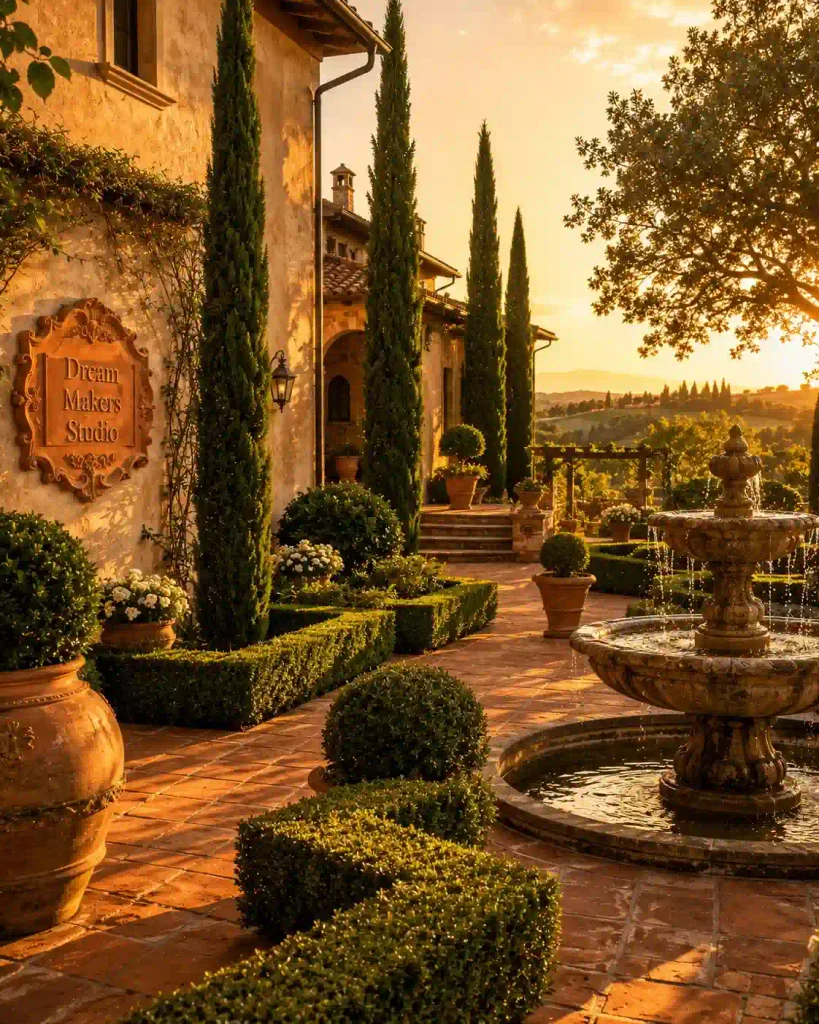
A carved stone fountain, towering Italian cypress trees, and neatly clipped evergreen hedges bring classic Tuscan elegance to this sunlit courtyard. Warm terracotta paving stretches between the rustic stucco walls and formal garden beds, while oversized clay urns and small flowering arrangements soften the structured design.
Why this garden works: The fountain creates a graceful focal point, while tall cypress trees draw the eye upward and rounded topiary adds balance at ground level. Rich green foliage contrasts beautifully with the golden walls and earthy paving, creating the welcoming atmosphere of a traditional Italian villa.
Garden design tip: Recreate this look with terracotta containers, compact evergreen shrubs, and a small recirculating fountain. Choose paving with a slip-resistant finish, give potted plants adequate drainage, and leave enough space around the fountain for easy cleaning. In colder climates, select winter-hardy evergreens and protect vulnerable terracotta pots from freezing.
4. Olive Trees and Lavender Gravel Borders

Garden formula: mature olive tree + purple lavender + silver-leaved lamb’s ear + ornamental grasses + pale gravel
A beautifully weathered olive tree spreads its silvery branches above a winding gravel pathway, while fragrant-looking lavender borders, feathery golden grasses, and soft silver foliage create a relaxed Mediterranean planting scheme. The pale stone farmhouse adds rustic character, allowing the purple, sage green, and buttery yellow flowers to stand out naturally.
Planting note: This Tuscan garden design works because low-growing plants soften the pathway while the olive tree provides height and a strong focal point. The mix of upright flower spikes, rounded shrubs, and flowing grasses creates movement without losing structure.
For a similar garden, choose a sunny position with well-drained soil and group plants with comparable watering needs. Lavender prefers lean, free-draining conditions, while olive trees need protection from severe frost in colder climates. Keep vigorous plants trimmed back from the gravel to preserve the pathway’s gentle curves.
5. Purple Salvia and Stone Terrace Planting
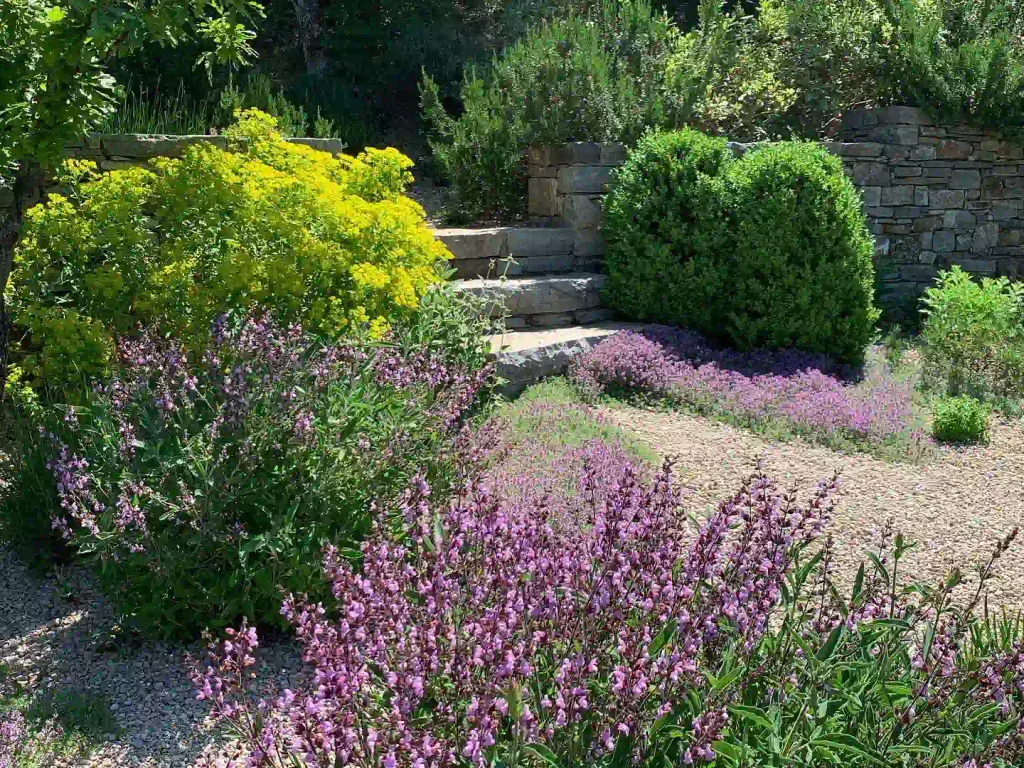
Why this garden works:
- Soft color against rugged stone: Billows of purple flower spikes and low mauve edging plants soften the hard lines of the stone steps and retaining wall, giving the space warmth without losing its rustic structure.
- Strong evergreen backbone: A clipped rounded shrub, upright woody herbs, and dense green background planting keep the border looking anchored even when flowers fade. That evergreen mass is a key part of successful Tuscan-style landscaping ideas.
- Gravel keeps it relaxed and practical: The pale gravel surface suits drought-tolerant planting and visually connects the pathway to the stonework. It also helps the flowers stand out more clearly than dark mulch would.
- Best use: This planting style works especially well in sunny borders with sharp drainage, where lavender, salvia, euphorbia, rosemary, and other Mediterranean plants can thrive without sitting in wet soil.
Maintenance tip: Trim flowering perennials after their main flush to keep the path open and encourage a neater second wave of growth. Keep clipped evergreens slightly narrower at the top so light can reach the lower growth.
6. An Elegant Tuscan Gravel Courtyard

A pale gravel courtyard, honey-colored stone walls, tall Italian cypress, and neatly trimmed evergreen hedges create a beautifully sheltered outdoor retreat. Soft pink climbing roses add a romantic touch beside the farmhouse windows, while delicate wrought-iron chairs and a small café table bring the relaxed charm of an old Italian villa.
Recreate this Tuscan garden:
- Main plants: Tall cypress trees for vertical structure and clipped evergreen hedges for privacy and year-round greenery.
- Supporting plants: Soft pink climbing roses and rounded evergreen shrubs to soften the stone walls and formal planting.
- Garden structure: Light-colored gravel, natural stone architecture, and simple wrought-iron furniture.
- Finishing touch: Add comfortable chair cushions, a small lantern, and a few terracotta planters for a welcoming seating area.
The beauty of this courtyard lies in its restrained planting and balanced proportions. Dense greenery frames the open gravel space without making it feel crowded.
Maintenance tip: Use compacted, well-drained gravel with a stable base beneath seating areas. Choose evergreen varieties suited to your climate, and allow enough room for pruning and airflow around climbing roses.
7. Climbing Grapevines and Rustic Stone Borders
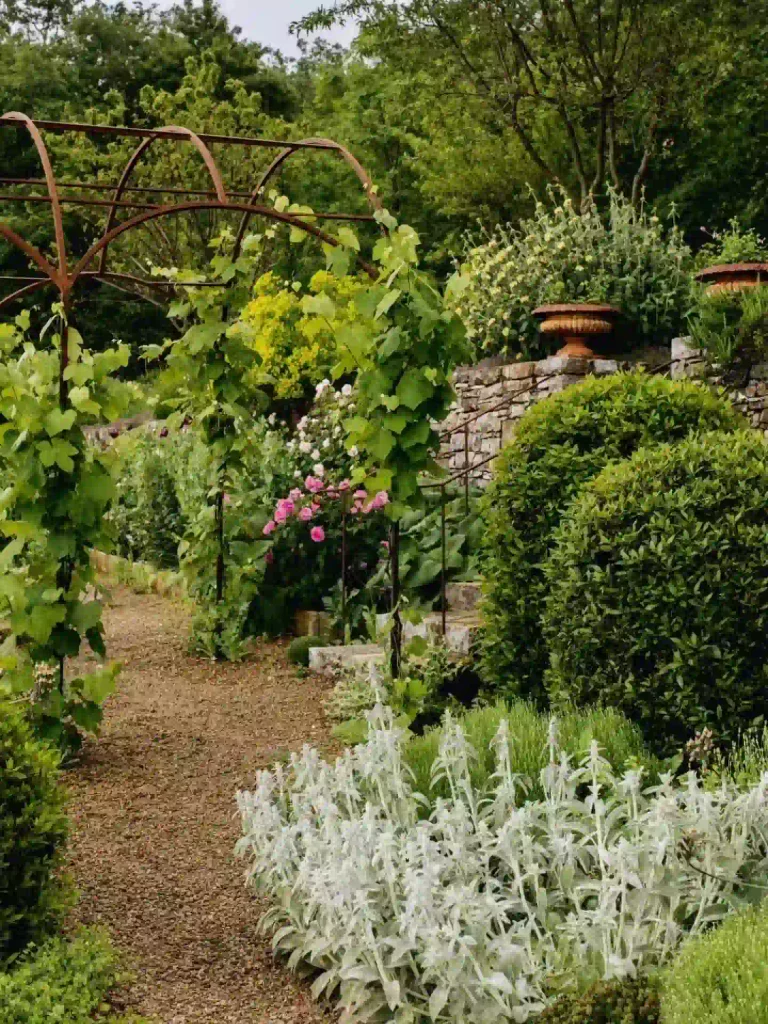
A winding gravel pathway passes beneath a rustic iron pergola covered with young grapevines, while soft pink roses, silvery lamb’s ear, and rounded evergreen shrubs create a lush, layered planting scheme. Weathered stone retaining walls and decorative terracotta urns add old-world character, blending beautifully with the surrounding greenery.
Best for: Sunny garden walkways, sloping landscapes, and Mediterranean-inspired backyards where natural stone and informal planting can work together.
The beauty of this Tuscan garden lies in the contrast between structured evergreen shapes and relaxed flowering plants. Silver foliage brightens the foreground, while climbing vines add height and gradually soften the metal arches.
Garden design tip: Train grapevines along a sturdy pergola in a sunny position with well-drained soil, allowing space for their mature growth. Plant roses where they receive good airflow, and keep vigorous vines pruned so they do not overwhelm the pathway or nearby plants.
8. Lavender and Ornamental Grass Stone Pathway
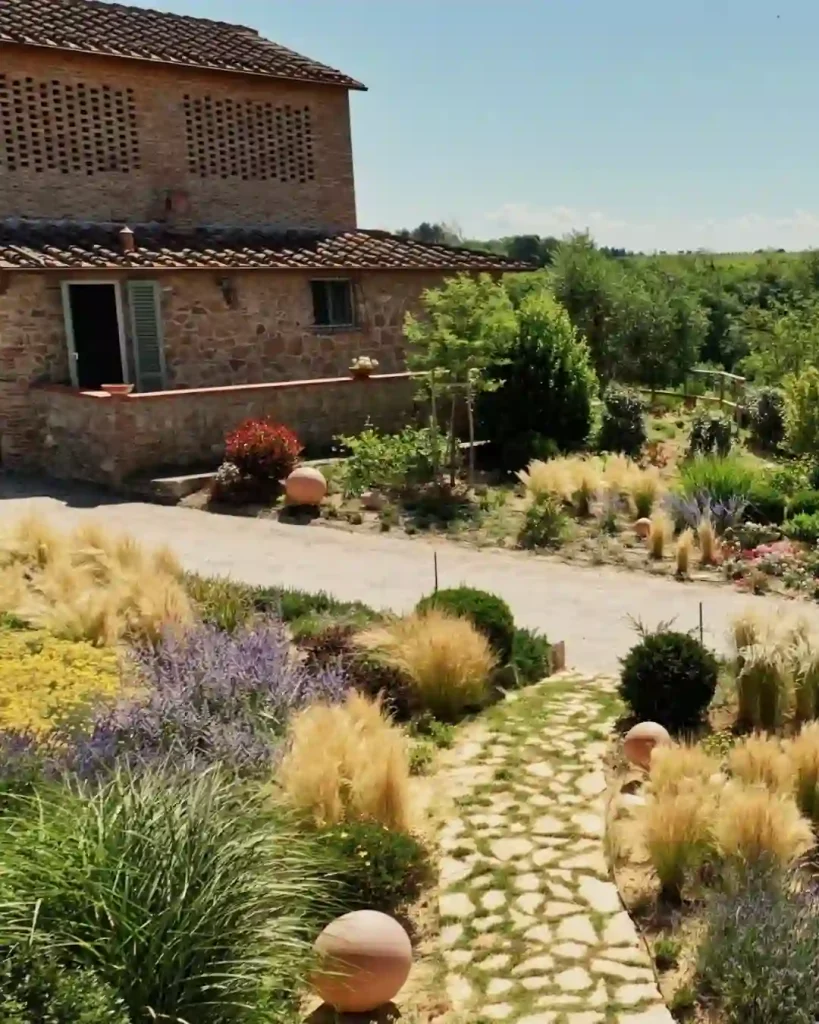
A rustic stepping-stone pathway winds through golden ornamental grasses, soft purple lavender, rounded evergreen shrubs, and cheerful yellow flowering plants. The warm stone farmhouse, traditional terracotta roof tiles, and scattered clay garden ornaments create the relaxed character of a Tuscan countryside retreat.
The beauty of this garden lies in its naturalistic planting. Feathery grasses bring movement and softness, while lavender adds gentle color and compact evergreen mounds provide structure. Irregular stone pavers with low greenery growing between them give the pathway an established, informal appearance.
Garden design tip: For a similar Mediterranean-inspired landscape, combine lavender with Mexican feather grass or another locally suitable ornamental grass, and repeat compact evergreen shrubs throughout the beds. Choose drought-tolerant plants that enjoy full sun and well-drained soil, but check local guidance before using self-seeding grasses.
Spacing tip: Allow ornamental grasses enough room to reach their mature width without covering the stepping stones. Use low, foot-traffic-tolerant ground covers between pavers and keep the walking surface level for safe, comfortable access.
9. Olive Trees + Bougainvillea + Reflecting Pool
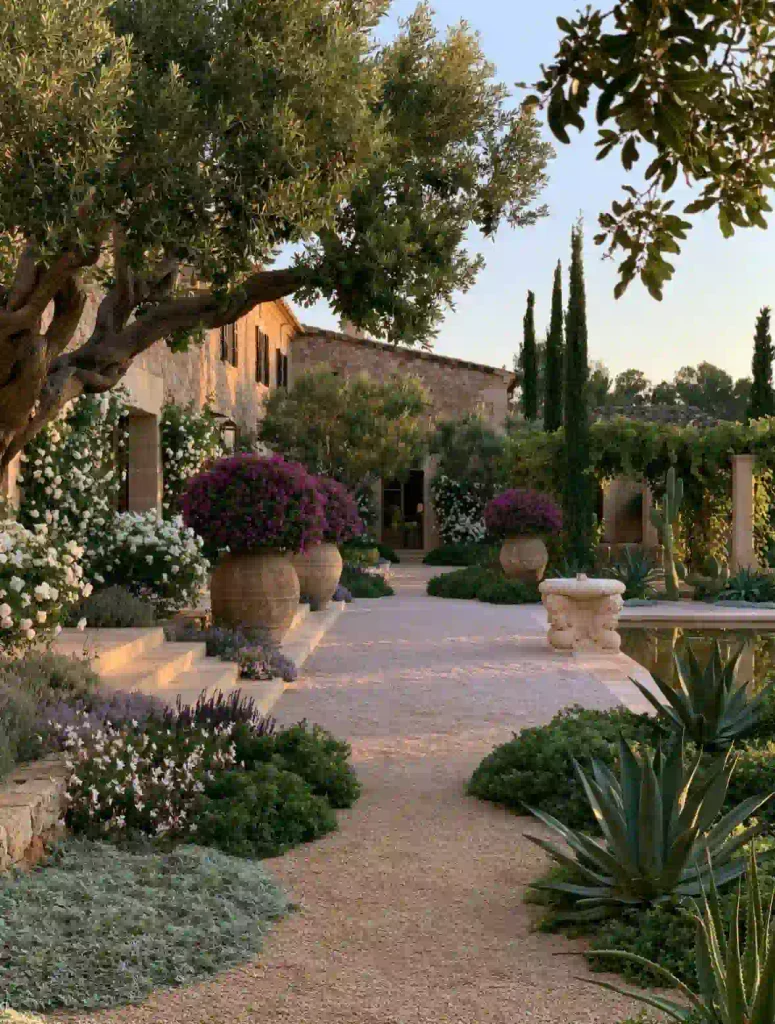
Garden formula: mature olive trees + magenta bougainvillea + white climbing roses + Italian cypress + pale gravel
A magnificent old olive tree stretches its twisting branches above a spacious gravel courtyard, while oversized terracotta urns overflow with vibrant purple-magenta blooms. White climbing roses soften the rustic limestone walls, and slender cypress trees add height against the warm evening sky. Sculptural agaves and a rectangular reflecting pool introduce a refined Mediterranean touch.
Garden design tip: The contrast between soft flowers, silvery olive foliage, and bold architectural plants gives this Tuscan garden its striking balance. Keep agaves in sharply drained beds, provide roses with suitable moisture and airflow, and grow bougainvillea in movable containers where winters are cold.
The open gravel pathway allows each planting feature to stand out, creating a calm, elegant courtyard without overcrowding the space.
10. White Flower Borders and Rustic Stone Steps
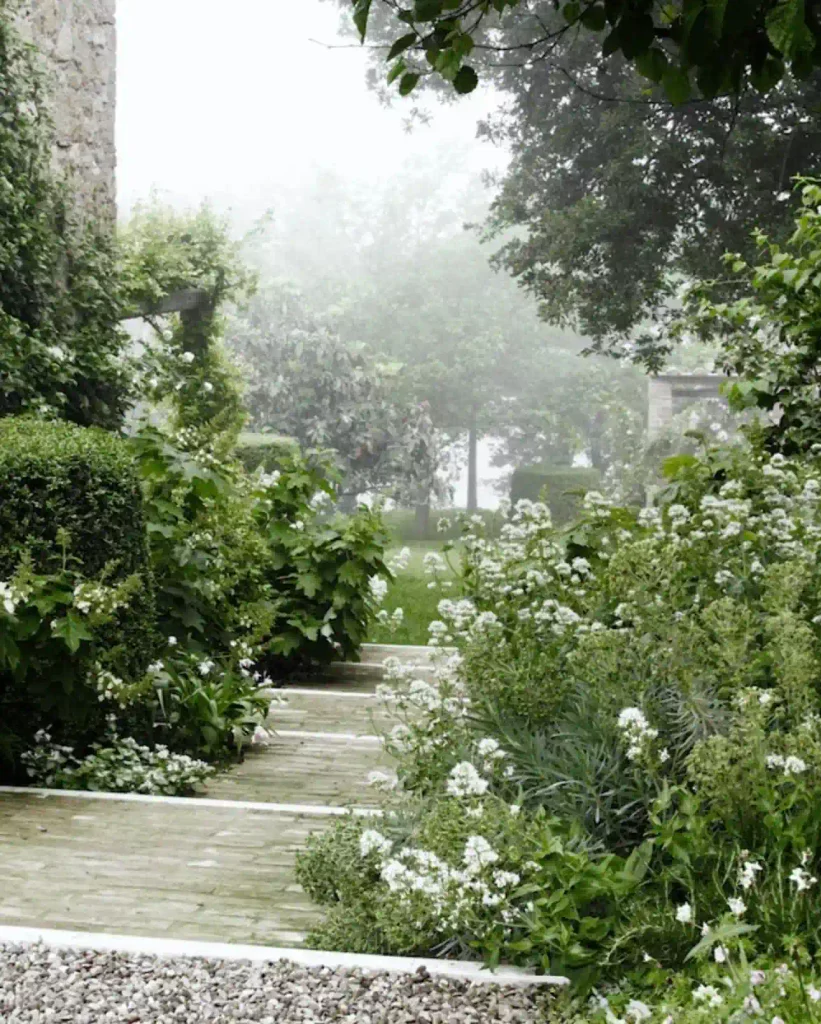
White flowering perennials spill gently over the edges of pale stone steps, surrounded by lush green foliage, clipped evergreen hedges, and mature trees. The weathered stone wall and soft, misty background give this secluded garden a romantic, old-world atmosphere, while layered planting creates a graceful transition between the pathway and surrounding greenery.
Best for: Sheltered garden pathways, partially shaded courtyards, and romantic Tuscan-inspired landscapes with established trees.
The beauty of this planting arrangement comes from its restrained green-and-white palette. Rounded evergreen shrubs provide structure, while airy white flower clusters and loose foliage soften the formal lines of the steps. Taller shrubs and overhanging branches create a natural sense of enclosure.
Planting note: For a similar look, select white-flowering perennials suited to the available light, pairing them with compact evergreen shrubs and leafy ground covers. In shaded areas, choose moisture-tolerant woodland plants rather than sun-loving Mediterranean herbs. Leave enough space around the steps to prevent plants from obstructing the walkway, and keep stone surfaces clear of slippery leaves and moss.
11. Italian Cypress and Terracotta Garden Borders
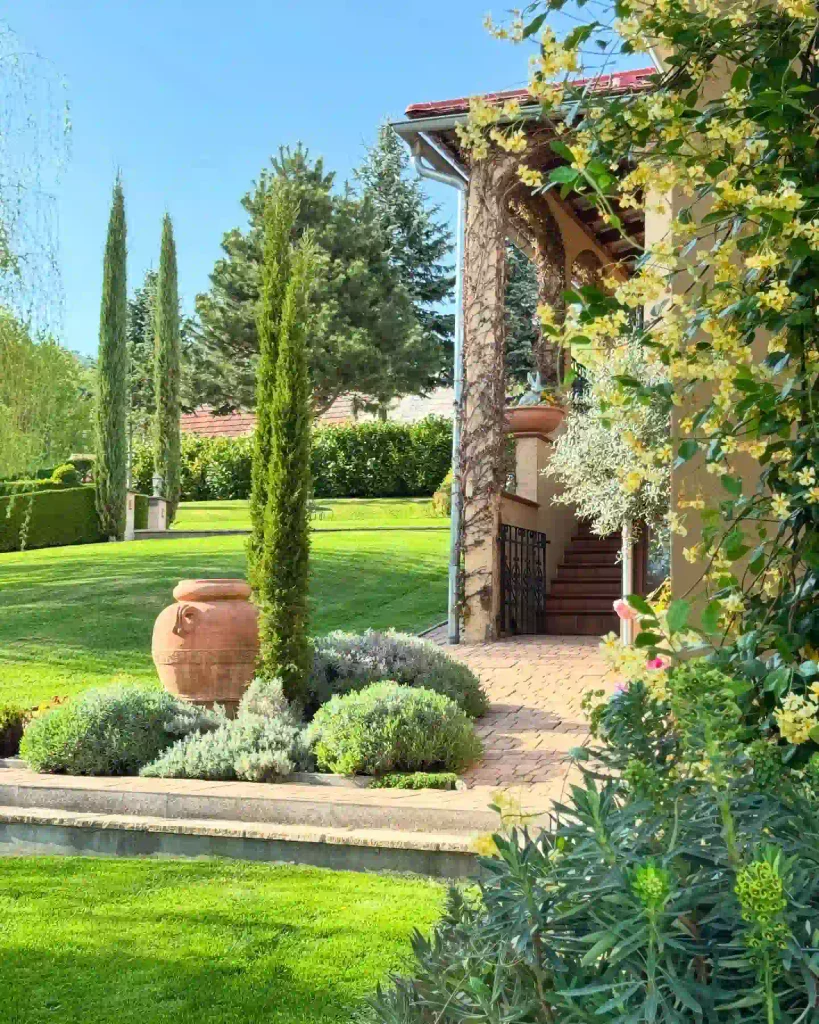
Tall Italian cypress trees rise above beautifully rounded silver-green shrubs, while a large terracotta urn adds rustic warmth beside the brick-paved courtyard. A lush green lawn, carefully clipped hedges, and delicate yellow flowering vines frame the traditional villa, creating a graceful balance between formal landscaping and relaxed Mediterranean charm.
Recreate this garden: Use a narrow cypress as the main focal point, then surround its base with rounded lavender shrubs, compact rosemary, or other silver-leaved plants suited to your climate. The contrast between upright evergreens and soft, mounded foliage gives this Tuscan garden its elegant structure.
Planting note: Cypress and Mediterranean herbs generally prefer sunny positions with well-drained soil, while the nearby lawn needs more regular watering. Separate their irrigation zones to avoid keeping drought-tolerant plants too wet.
Finish with a weathered terracotta pot and warm-toned paving to bring the planting together. Allow enough room for the cypress to reach its mature size without crowding the pathway or building.
12. Olive Grove With Rustic Raised Garden Beds
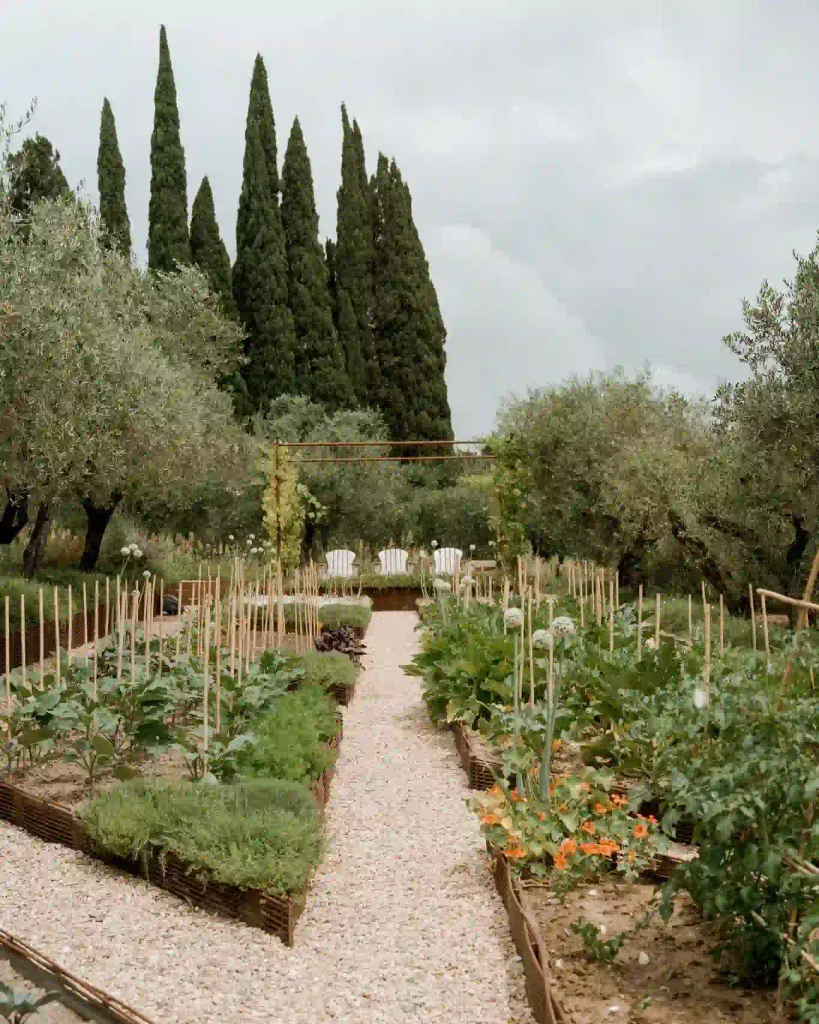
A straight gravel pathway runs between neatly arranged raised vegetable beds, framed by mature olive trees and towering Italian cypress. Natural woven-style garden edging, slender bamboo supports, leafy vegetables, and delicate white allium flowers give this Tuscan kitchen garden a charming countryside character.
Recreate this Tuscan garden:
- Main plants: Leafy vegetables, climbing crops, and culinary herbs arranged in rectangular garden beds for easy harvesting.
- Supporting plants: Flowering alliums and bright orange nasturtiums add seasonal color while attracting pollinators.
- Garden structure: Low raised beds with rustic woven edging, pale gravel walkways, and simple bamboo plant supports.
- Finishing touch: A modest vine-covered metal arbor and white outdoor chairs create a quiet seating spot beneath the surrounding olive trees.
Planting note: Vegetables generally need six or more hours of direct sunlight, so place productive beds beyond the densest tree shade. Improve the soil with compost, provide reliable irrigation, and keep pathways wide enough for comfortable harvesting.
The combination of edible planting, silvery olive foliage, and dark cypress trees creates a practical Tuscan garden that feels both productive and beautifully established.
13. Silver Foliage and Purple Salvia Borders

Silvery lamb’s ear, soft green flowering mounds, and vibrant purple salvia create a beautifully layered garden around a gently curving gravel pathway. Dense evergreen hedges frame the planting, while upright flower spikes and rounded foliage bring texture, movement, and natural Mediterranean charm.
Why this garden works: The combination of cool silver leaves, fresh green foliage, and rich purple blooms creates a calm color palette without feeling dull. Repeating low, rounded plants along the pathway gives the garden a graceful rhythm, while taller flowering perennials add seasonal interest.
Color note: Keep the palette focused on silver, green, lavender, and deep violet for a cohesive Tuscan-inspired border. Repeated plant groups create a fuller effect than scattering many different varieties throughout the bed.
For a similar look, choose sun-loving lavender, salvia, and lamb’s ear in well-drained soil, allowing space for their mature spread. Avoid planting too close to the gravel edge, and trim spent flower stems when appropriate to maintain a neat, softly structured appearance.
14. Olive Tree Courtyard With Rustic Pergola
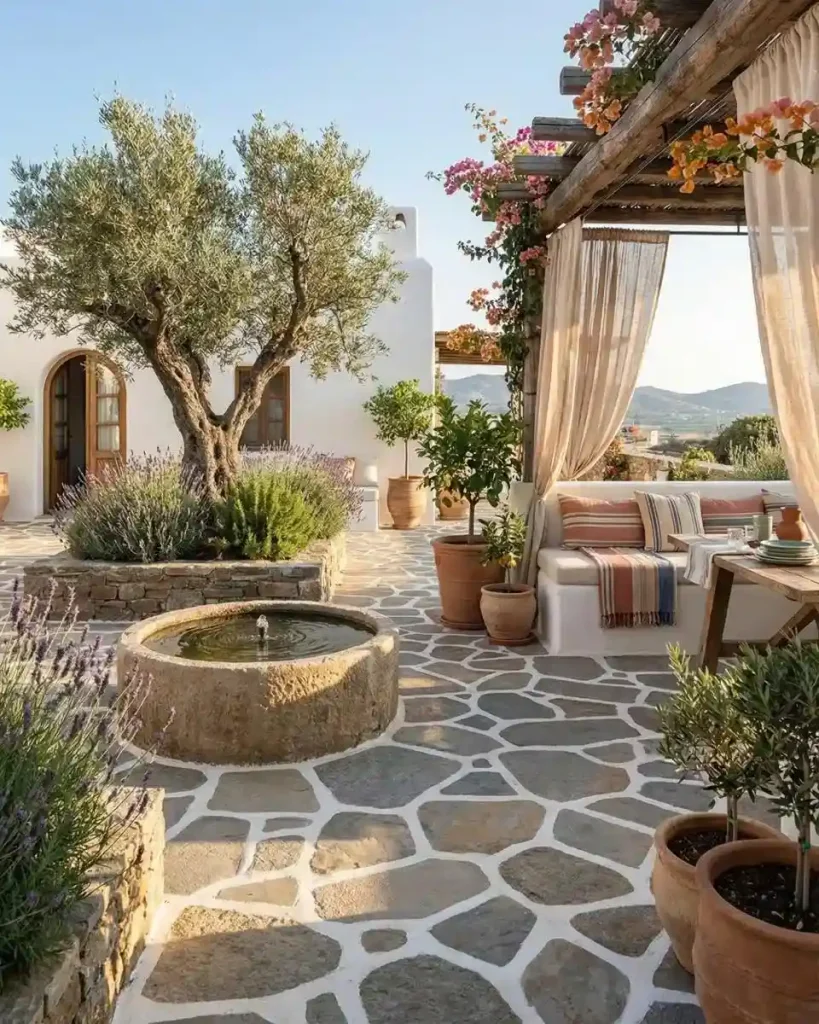
A mature olive tree rises from a raised stone planter, surrounded by soft lavender, rosemary, and silvery Mediterranean foliage. Irregular natural stone paving leads toward a rustic timber pergola, where flowing cream curtains, flowering bougainvillea, and comfortable outdoor seating create a warm, inviting retreat. A circular stone fountain adds a gentle focal point, while terracotta pots filled with small trees bring extra greenery to the sunlit courtyard.
Garden formula: olive tree + lavender + terracotta planters + natural stone paving + flowering pergola
The beauty of this Tuscan-inspired garden comes from its mix of rugged materials and soft planting. The olive tree provides sculptural height, lavender adds delicate purple color, and pink and peach flowers soften the weathered timber overhead.
Garden design tip: Recreate this atmosphere with a small recirculating fountain, locally suitable Mediterranean-style plants, and a sturdy pergola. Grow lavender and rosemary in sunny, well-drained beds, while giving container trees enough root space and regular watering during hot weather.
For lasting comfort, choose outdoor fabrics that resist fading and moisture, and leave clear walking space between the fountain, planters, and seating area.
15. Italian Cypress and Lavender Fountain Courtyard
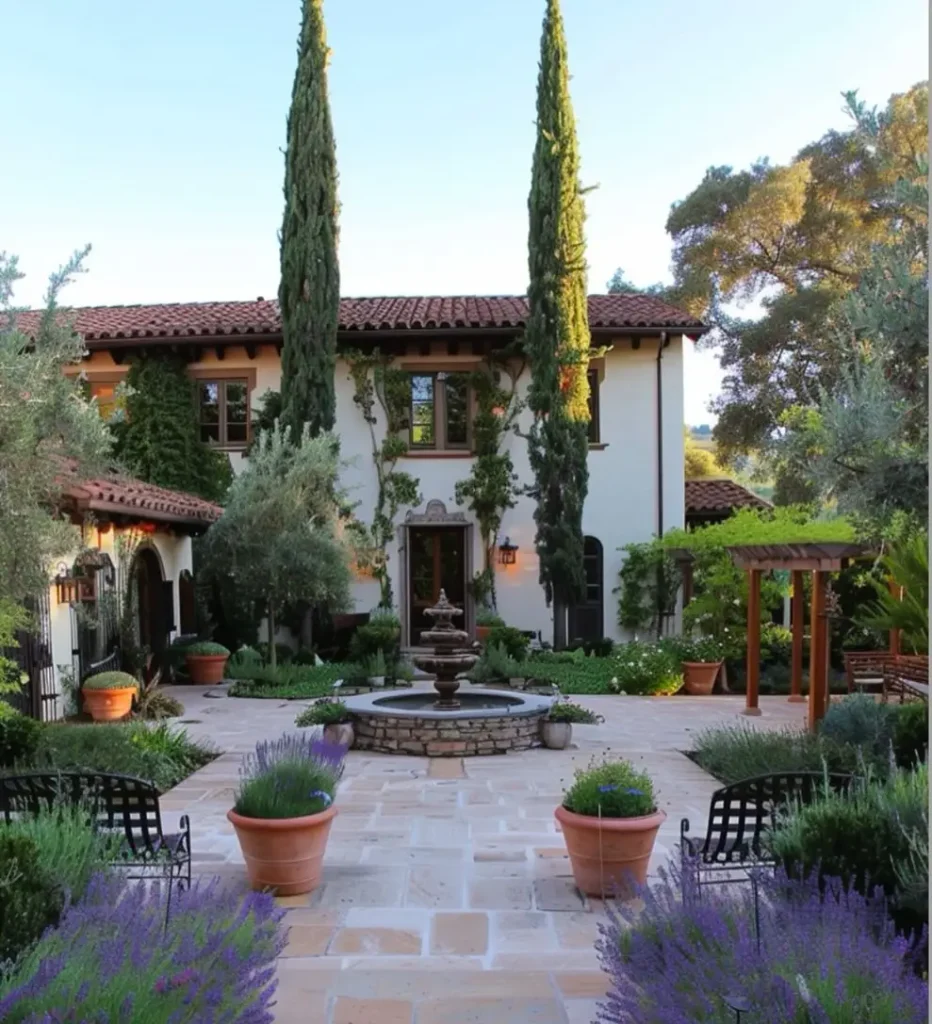
Tall Italian cypress trees frame a beautiful Mediterranean-style villa, while a tiered stone fountain stands at the center of a spacious limestone courtyard. Soft purple lavender borders, silvery olive trees, clipped evergreen shrubs, and oversized terracotta planters bring rich botanical texture to the warm stone paving. A wooden pergola and simple black garden benches complete the inviting old-world setting.
The garden’s balanced layout creates a natural sense of order without feeling overly formal. Towering cypress trees draw the eye upward, while low lavender borders soften the pathways and add seasonal color. The central fountain provides a graceful focal point, connecting the surrounding planting beds and outdoor seating areas.
Garden design tip: Recreate this Tuscan courtyard with a small stone fountain, repeated lavender planting, and narrow evergreen trees suited to your climate. Choose a sunny position with well-drained soil for Mediterranean herbs, and use weather-resistant natural stone paving around the water feature.
Maintenance note: Keep lavender trimmed after flowering, allow cypress trees room to mature, and clean the fountain regularly to maintain clear water. For smaller courtyards, a compact fountain and potted evergreens can create a similar atmosphere without requiring extensive landscaping.
16. Curved Stone Pathway With Evergreen Topiary

A gracefully curved stone pathway winds through bright white decorative gravel, rounded evergreen shrubs, and vivid red flowering borders. A sculptural olive tree anchors the entrance, while a slender leafy tree, neat green lawn, and warm cream-colored villa create a fresh Mediterranean garden setting.
Why this garden works:
- Curved garden structure: The sweeping paved walkway softens the straight lines of the house and guides visitors naturally toward the entrance.
- Evergreen repetition: Clipped spherical shrubs create a neat, balanced look, while their rich green foliage stands out against the white gravel.
- Bold color contrast: Deep red flowers add a striking border between the pale stones and gray paving, bringing warmth to the otherwise restrained planting.
- Sculptural focal point: The olive tree provides character through its twisted trunk and silvery foliage, connecting this modern landscape with traditional Tuscan garden ideas.
Garden design tip: Recreate this layout with compact evergreen topiary, a small ornamental olive tree where climate allows, and a curved border of seasonal flowers. Install landscape edging to keep decorative gravel separate from the lawn and pathways.
For easier maintenance, use permeable paving where practical, allow room for shrubs to reach their mature width, and keep plants with different watering needs in separate irrigation zones.
17. Terracotta Planters in a Shaded Courtyard
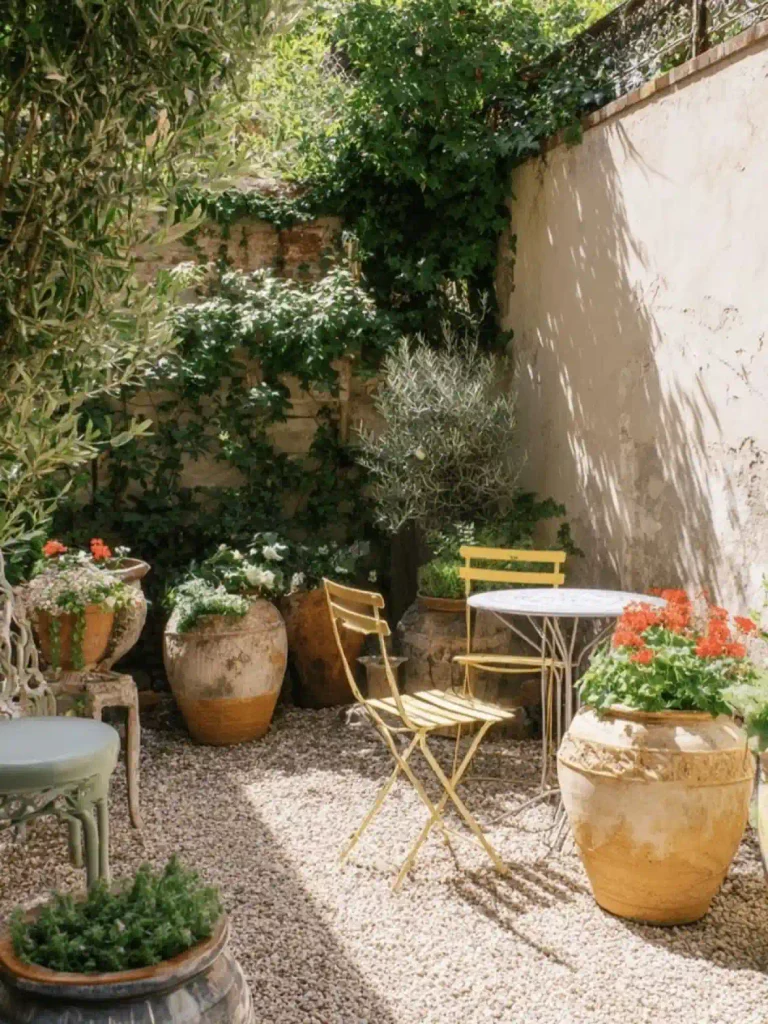
Weathered terracotta urns filled with colorful geraniums and trailing greenery surround a charming bistro table with soft yellow metal chairs. Silvery olive foliage, leafy climbing vines, and rustic plaster walls create a sheltered garden corner, while pale gravel underfoot adds warmth and texture to this intimate Mediterranean retreat.
Best for: Small Tuscan courtyards, enclosed patios, and sheltered outdoor seating areas where container gardening makes the most of limited space.
The beauty of this arrangement lies in its relaxed mix of aged pottery, delicate flowers, and natural greenery. Large clay pots give the space an established feel, while the compact café furniture leaves room to enjoy morning coffee or a quiet afternoon outdoors.
Container gardening tip: Choose terracotta pots with drainage holes and group plants according to their sunlight and watering needs. Geraniums generally flower best with several hours of direct sun, while shade-tolerant foliage plants can fill darker corners.
For a low-maintenance finish, use a stable gravel base beneath the furniture, prune climbing vines to prevent overcrowding, and select a few generous planters rather than filling every corner with small pots.
18. Lavender Borders and Rustic Stone Farmhouse
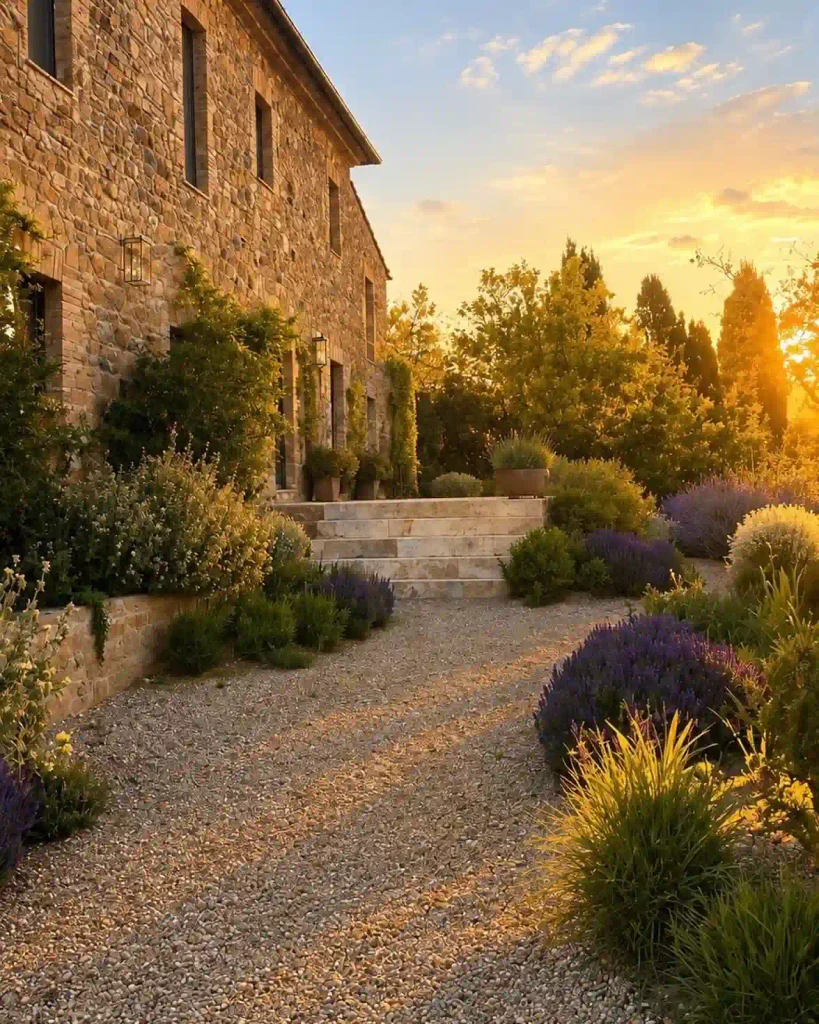
A winding gravel pathway curves past a weathered stone farmhouse, framed by rich purple lavender, rounded evergreen shrubs, and soft ornamental grasses. Pale limestone steps lead toward the entrance, while terracotta planters, climbing greenery, and warm lanterns add charming details. The golden evening sunlight brings out the honey-colored stone and creates the relaxed beauty of a traditional Tuscan countryside garden.
Why this garden works: The contrast between rugged stone, deep green foliage, and vibrant purple flowers creates a natural, balanced landscape. Lavender mounds soften the gravel edges, while taller shrubs and trees provide depth and a sense of privacy. Repeated planting groups help the garden feel established without looking overly formal.
Garden design tip: Recreate this setting with sun-loving lavender, rosemary, compact evergreen shrubs, and locally suitable ornamental grasses. Choose well-drained soil for Mediterranean herbs and position taller plants behind low flowering borders to preserve views of the farmhouse.
Seasonal care: Trim lavender lightly after flowering without cutting into old woody stems, and remove spent perennial blooms where appropriate. Keep gravel pathways clear of fallen leaves and spreading plants so the garden remains welcoming throughout the seasons.