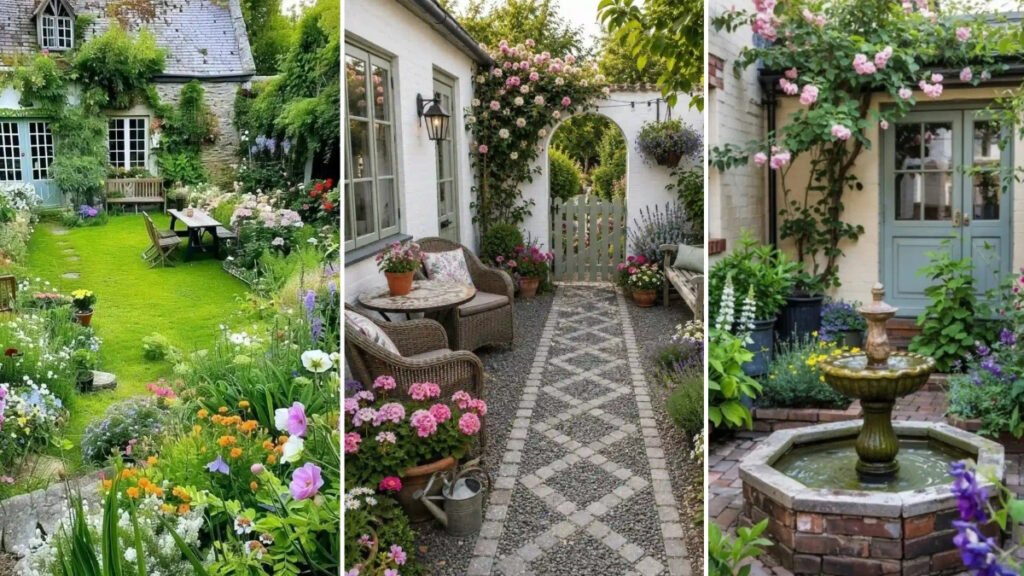
Strong sun can turn a promising garden into a patchwork of scorched leaves, thirsty flowers, and bare soil. The space feels exposed instead of welcoming.
Adding plants at random rarely solves it. Poor drainage, crowded roots, and mismatched watering needs can make a sun-baked border harder to care for each season.
These 17 Mediterranean garden ideas bring together silvery foliage, fragrant herbs, airy trees, and warm stone. You’ll find practical ways to build shade, choose plants for your climate, and create relaxed beauty without constant upkeep.
The Simple Planting Layers Behind Mediterranean Charm
- Start with natural structure: Use pale gravel, weathered stone, or terracotta containers to create warm, earthy foundations. A curved pathway can soften the layout while keeping garden beds easy to reach.
- Layer fragrant, sun-loving plants: Combine lavender, rosemary, and creeping thyme in well-drained, sunny areas. Place taller shrubs behind lower plants, allowing enough space for their mature growth.
- Create a beautiful focal point: A potted olive tree, where the climate allows, adds silvery foliage and sculptural character. In colder regions, choose a hardy alternative or protect the olive during winter.
- Keep watering practical: Group plants with similar moisture needs and water new plantings regularly while their roots establish. Raised beds can improve drainage where native soil stays wet.
1. Colorful Succulent Mediterranean Front Garden
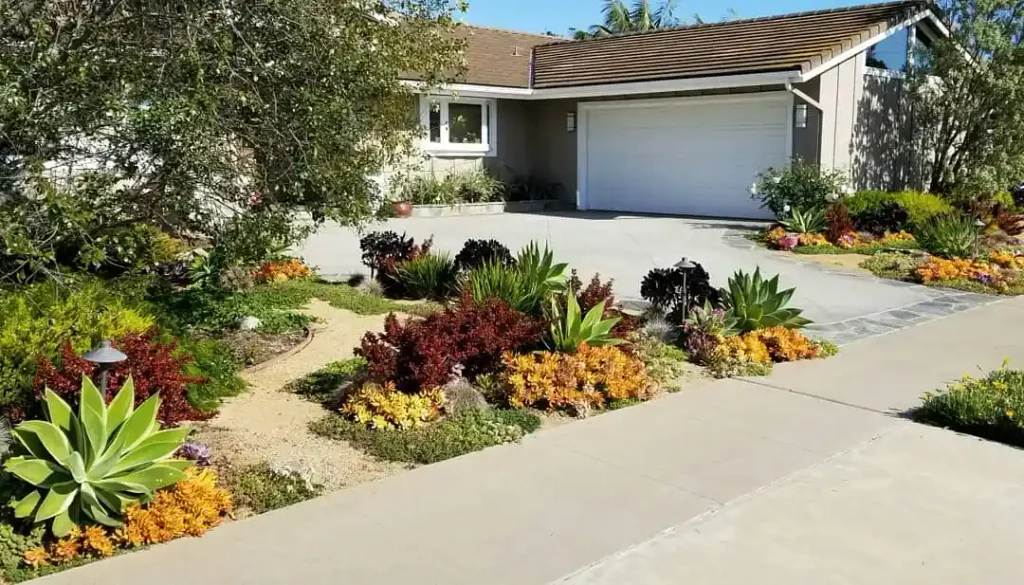
Large sculptural agaves, golden succulents, burgundy foliage, and low-growing green plants create a striking Mediterranean-inspired front yard. Curved gravel beds soften the wide concrete driveway, while clusters of bold, spiky leaves bring texture and structure to the landscape.
The combination works beautifully because the plants contrast in height, shape, and color. Bright yellow-orange groundcovers brighten the borders, while darker foliage adds depth without overwhelming the space. Mature trees provide a leafy backdrop and patches of shade.
Garden design tip: Group succulents according to their sunlight and watering needs. Use fast-draining soil, leave room for agaves to reach their mature width, and keep sharp leaf tips away from walkways. In frost-prone climates, choose cold-hardy alternatives suited to your growing zone.
2. A Pergola Courtyard with Pink Climbers

Pink flowering climbers spilling across a timber pergola give this courtyard its soft, romantic canopy, while white walls, pale stone paving, and woven seating keep the space bright and airy. It’s one of those Mediterranean garden ideas that feels both relaxed and refined.
- Why it works: The overhead flowers draw the eye up and add shade, while the neutral hardscaping stops the bold pink blooms from feeling too heavy. Built-in planters and small shrubs keep the layout calm and balanced.
- Planting tip: Train climbers carefully along a sturdy pergola and prune after the main flowering flush to keep the canopy open. Leave enough root room at the base, and avoid crowding the seating area with plants that need frequent cutting back.
- Best growing conditions: This style suits a sunny, sheltered courtyard with sharp drainage and heat-tolerant planting. A climbing bougainvillea can give a similar effect in warm climates, while climbing roses or other sun-loving vines may suit cooler regions better.
3. Olive Trees + Lavender + Pale Stone

Recreate this garden:
- Main plants: Mature olive trees, a tall cypress, lavender-toned flowering perennials, and soft ornamental grasses
- Supporting plants: Rounded evergreen shrubs, likely rosemary or similar drought-tolerant herbs, plus white flowering plants for contrast
- Garden structure: A long border against a white wall, edged with pale gravel, large natural boulders, and wide stone paving
- Finishing touch: Warm uplighting that highlights the trunks and keeps the border glowing into the evening
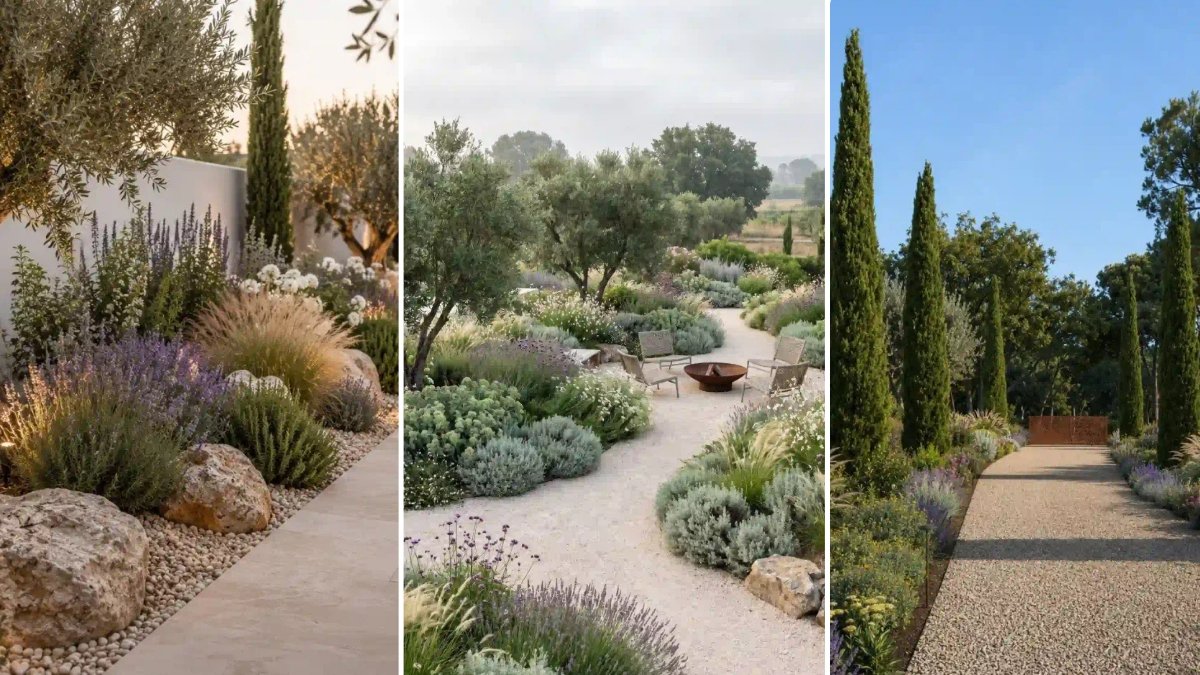
This planting works because it layers silvery foliage, vertical shape, soft mounds, and airy flower spikes without feeling crowded. The restrained palette of green, lavender, cream, and warm stone gives the space a calm Mediterranean mood, while the gravel mulch and drought-tolerant planting style suggest a layout that can stay attractive with modest maintenance.
Watering tip: Keep the best drainage around olives, lavender, and rosemary-type plants, especially in winter. In heavier soils, raised planting pockets or extra grit can help prevent roots from sitting wet.
4. A Modern Mediterranean Entry Courtyard
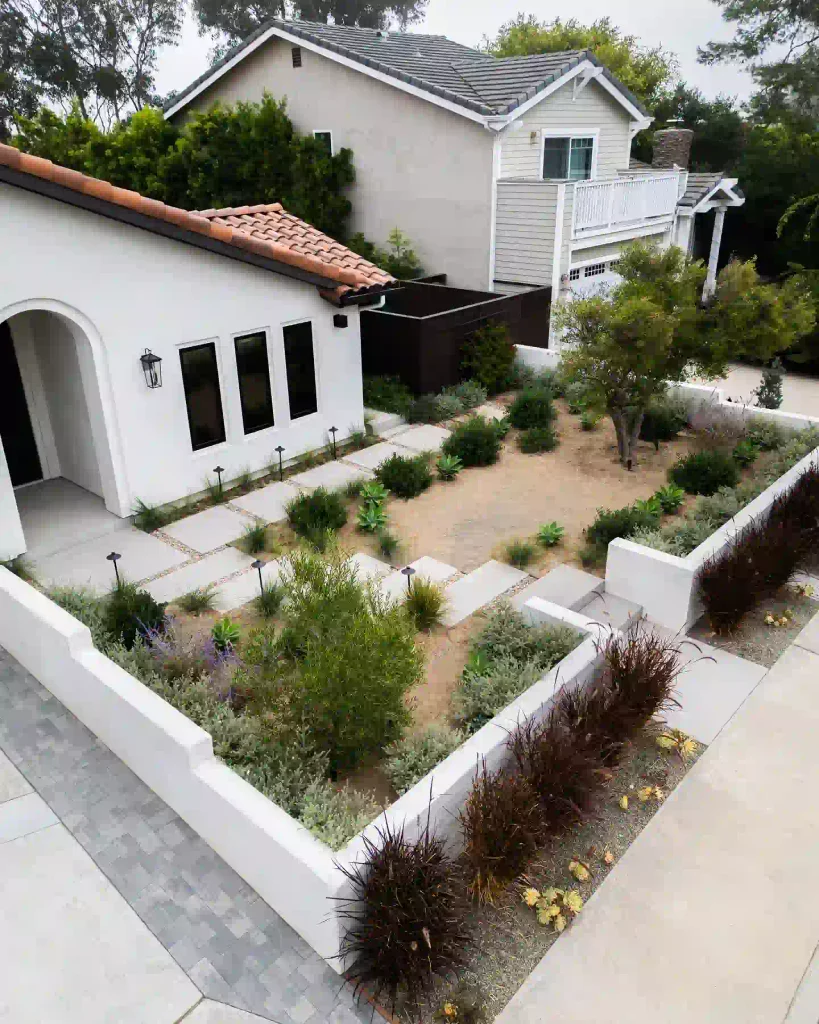
Best for: sunny front yards, low-water landscapes, and clean-lined homes with a warm-climate planting style.
Wide stepping stones, sandy planting beds, silver shrubs, strappy grasses, and scattered succulents give this front garden a calm, architectural look. The white stucco walls and terracotta roof reinforce the Mediterranean feel, while the open spacing keeps the courtyard neat and easy to navigate.
This garden works because it balances structure and softness. Repeated mounded shrubs create rhythm, the succulents add sculptural accents, and the pale hardscaping reflects light rather than making the space feel heavy.
Maintenance tip: A gravel mulch or finer stone layer across the exposed soil would help reduce evaporation, suppress weeds, and make the planting scheme look more finished. It would also tie the stepping-stone path more closely to the rest of the garden layout.
5. Lavender + Succulents + Purple Irises

Soft lavender mounds, deep purple bearded irises, silvery-green succulent rosettes, and rounded evergreen shrubs create a richly layered Mediterranean garden border. The combination of violet flowers, dusty foliage, and fresh green leaves brings beautiful contrast, while golden ornamental grasses add gentle movement in the background.
Planting note: Lavender and many rosette-forming succulents prefer sunny positions with excellent drainage. Bearded irises also benefit from good drainage, but their rhizomes should remain partly exposed rather than buried beneath thick mulch.
- Why it works: Low succulent clusters fill the foreground, rounded shrubs provide structure, and taller lavender and iris flowers create height without blocking the view.
- Watering tip: Use separate drip irrigation zones where needed, allowing drought-tolerant plants to dry between waterings once established. Keep adequate spacing around the plants to encourage airflow and healthy growth.
6. Olive Trees Along a Gravel Garden Path

Garden formula: olive trees + silver shrubs + ornamental grasses + white gravel path
Graceful olive trees arch over a long pale gravel walkway, creating dappled shade and a soft, settled feel. The planting on both sides stays restrained and elegant, with silvery foliage, clipped green mounds, airy grasses, and a few terracotta pots adding warmth against the muted garden palette. The simple path layout gives the garden structure, while the loose, natural planting keeps it from feeling formal or stiff.
Why this garden works:
- The olive canopy adds height and light shade without making the path feel enclosed.
- Silver and grey-green foliage reflects heat and ties the whole border together visually.
- Gravel suits the Mediterranean mood and improves drainage around drought-tolerant plants.
- Terracotta containers and soft white flowers break up the cool tones with a gentler, welcoming touch.
7. A Natural Stone and Gravel Garden Path

Circular concrete stepping stones wind through pale gravel, surrounded by rugged boulders, silvery shrubs, soft green foliage, and delicate blue, white, and yellow flowers. The curved pathway creates a relaxed Mediterranean-inspired garden, while established trees add height and welcome shade.
Why this garden works: The combination of natural stone, loose gravel, and layered planting softens the narrow space. Rounded shrubs provide year-round structure, while small flowering plants add seasonal color without overwhelming the design.
For a similar look, plant rosemary or other climate-suitable evergreen herbs in sunny, well-drained areas. Use compact flowering perennials along the edges and leave room for shrubs to reach their mature size.
Garden design tip: Place stepping stones at a comfortable walking distance and set them level with the surrounding gravel. Keep loose stones away from the walking surfaces, and choose plants suited to the different light conditions beneath the trees and along the open pathway.
8. Illuminated Olive Trees and Stone Walkway
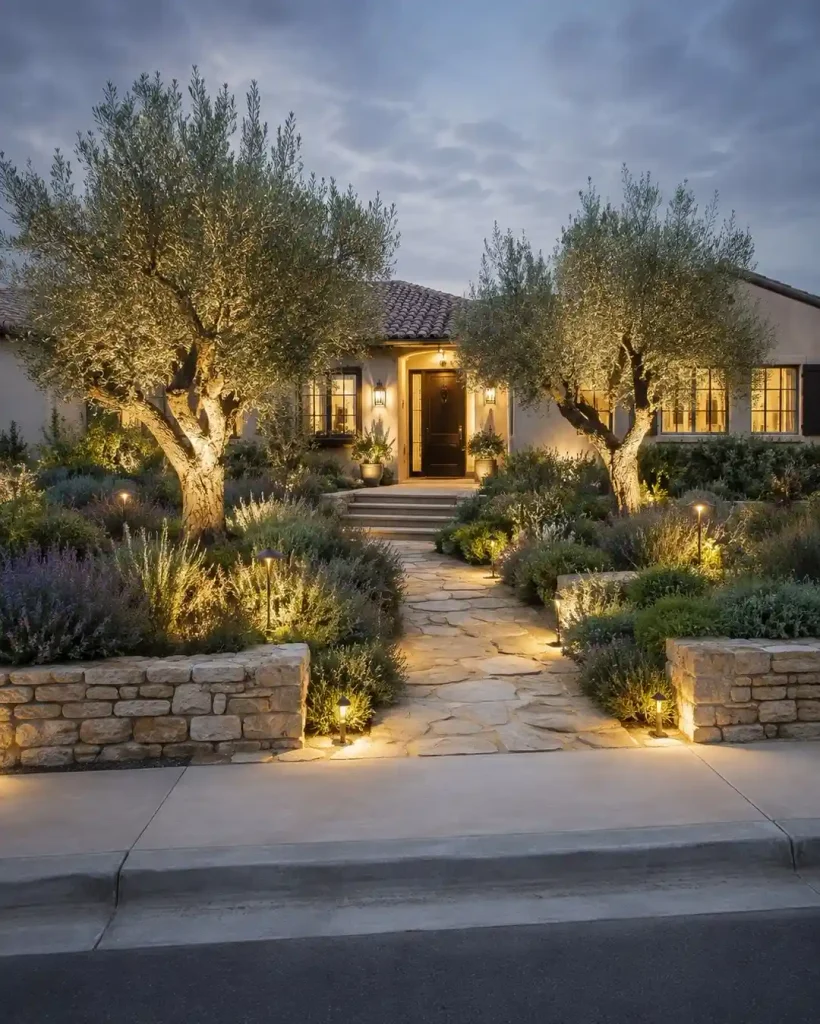
Two mature olive trees frame a gently winding natural stone pathway, creating a grand yet welcoming entrance to this Mediterranean-style home. Soft purple flowering borders, silvery-green shrubs, and low ornamental grasses surround the walkway, while rustic stone walls add warmth and structure.
The most striking feature is the carefully placed landscape lighting. Warm uplights reveal the olive trees’ textured trunks and airy canopies, while smaller pathway lights guide visitors toward the entrance. The combination brings depth and a peaceful atmosphere to the garden after sunset.
Garden design tip: Position uplights to highlight tree trunks without shining into windows or neighboring properties. Choose well-drained planting areas for olives and lavender, and allow enough space around mature roots. In colder climates, use locally hardy trees with similarly sculptural branching to achieve the same elegant effect.
9. Potted Olive Trees and Lavender Borders
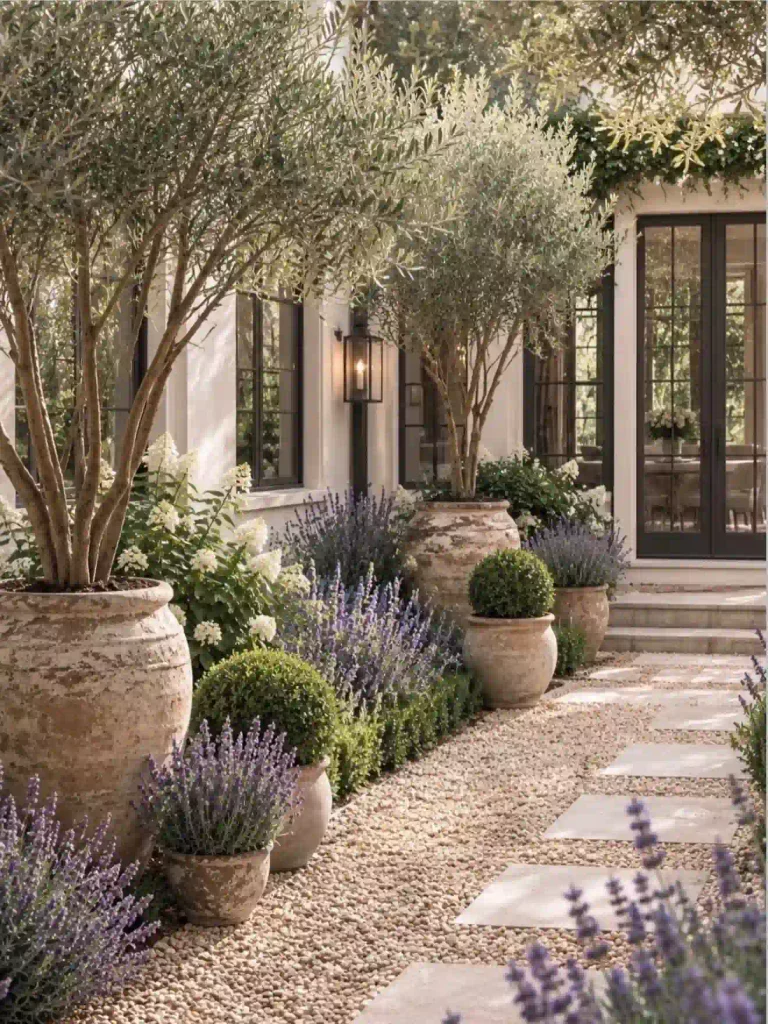
Mature olive trees in oversized weathered terracotta pots create a graceful canopy above soft purple lavender, clipped green shrubs, and creamy white flowers. Pale gravel and rectangular stone stepping slabs give this Mediterranean courtyard a warm, natural finish, while black-framed doors and lanterns add a refined architectural contrast.
Why this garden works: The arrangement combines tall, silvery olive foliage with rounded evergreen shapes and loose lavender flowers. Repeating aged terracotta containers creates a sense of balance, while the restrained purple, white, and green palette keeps the entrance calm and inviting.
Planting note: Choose large containers with drainage holes and use a free-draining potting mix for olive trees. Lavender also needs good drainage and plenty of direct sunlight, while the white flowering shrubs may require more moisture. Water each planting according to its needs rather than treating the entire courtyard as one irrigation zone.
10. Palm + Agave + Black Gravel

Why this garden works:
- A tall feather palm creates instant height and a bold focal point, while agaves, aloes, cacti, and other sculptural plants keep the lower planting dramatic and clean-lined.
- Black gravel gives the courtyard a sharp, modern finish and makes the green foliage stand out more strongly than pale stone would.
- Large stepping slabs, a simple deck edge, and a white boundary wall keep the layout uncluttered, which suits a small outdoor garden ideas approach in compact spaces.
- Rounded white garden lights and a few natural boulders soften the harder lines and stop the design from feeling too stark.
What to avoid: Keep spiny plants away from the main walking edge and give each succulent enough room for its mature spread. In wetter climates, excellent drainage is essential, especially for agaves and cacti, so a raised bed or sharply draining mineral soil mix can make this style much more reliable.
11. Bougainvillea Courtyard with Stone Fountain
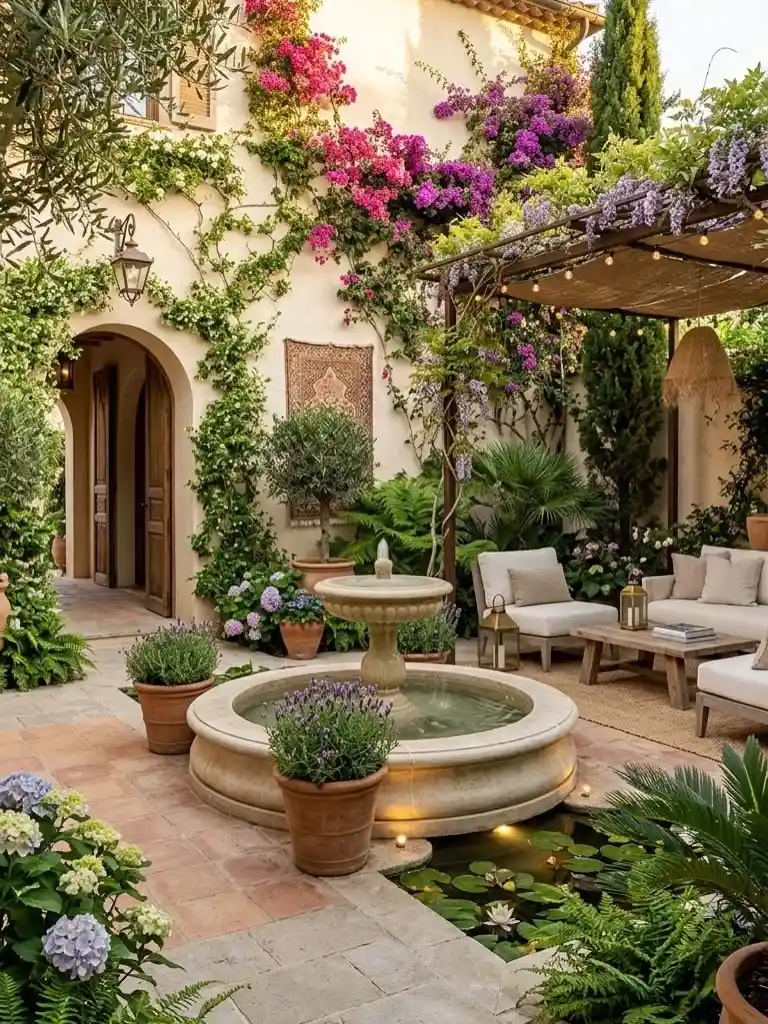
Vibrant pink and purple bougainvillea climbs across creamy stucco walls, while trailing wisteria-like blooms soften a shaded pergola above a cozy outdoor seating area. A circular stone fountain anchors the courtyard, surrounded by warm terracotta paving, potted lavender, leafy ferns, and flowering hydrangeas.
The layered planting brings together bold Mediterranean color and lush greenery. Tall cypress trees provide vertical structure, while the central fountain, woven pendant light, and comfortable neutral furniture create an inviting outdoor retreat.
Garden design tip: Position bougainvillea in a warm, sunny, well-drained spot and provide sturdy support for its vigorous growth. Hydrangeas and ferns generally need more moisture and protection from intense afternoon sun, so place them in sheltered corners with separate irrigation. This allows the courtyard to feel lush without giving every plant the same watering treatment.
12. A Naturalistic Gravel Garden with Grasses
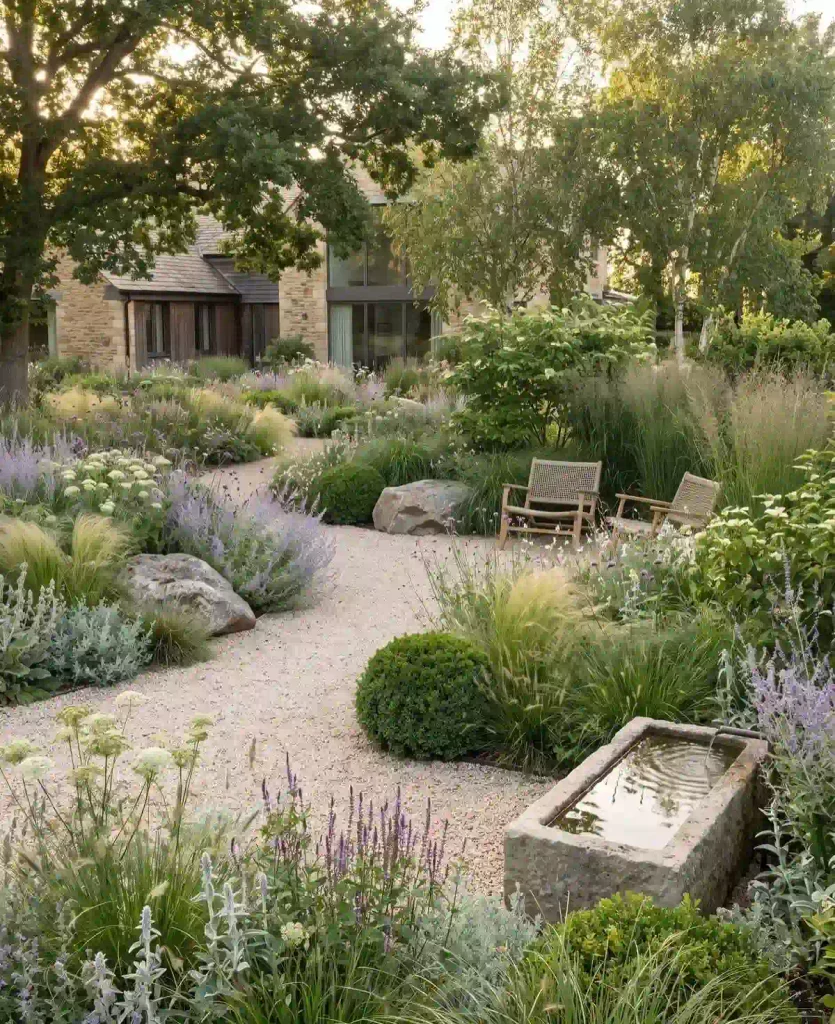
Soft ornamental grasses, lavender-purple flower spikes, silvery foliage, and rounded evergreen shrubs frame a winding pale gravel pathway. Large natural boulders, a rustic stone water trough, and two simple wooden chairs create a relaxed seating area surrounded by lush, meadow-style planting.
Why this garden works: The contrast between airy grasses, rounded shrubs, and delicate flowers brings movement and depth without making the garden feel crowded. The soft green, silver, cream, and violet palette gives this Mediterranean-inspired landscape a calm, natural appearance.
- Planting idea: Combine drought-tolerant salvias, suitable ornamental grasses, and silver-leaved perennials in sunny, well-drained areas. Choose varieties suited to your climate and allow space for their mature spread.
- Maintenance tip: Cut back deciduous grasses at the appropriate time for each species, refresh gravel where needed, and keep the water trough clean to prevent stagnant water.
13. Rustic Stone Courtyard with Olive Trees
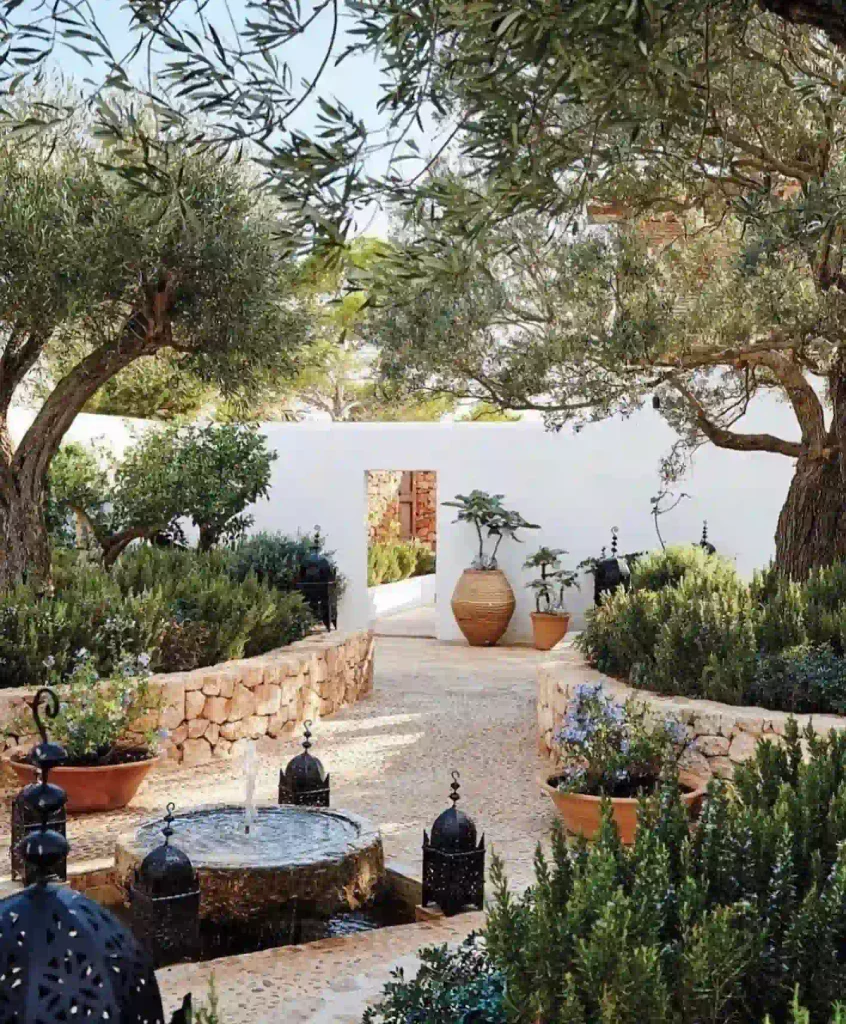
Mature olive trees, lush rosemary shrubs, honey-colored stone walls, and a small bubbling fountain bring an authentic Mediterranean character to this sheltered courtyard. The pale pebble pathway leads toward a simple white stucco entrance, while terracotta planters and decorative black lanterns add warmth and traditional charm.
Why this garden works: The olive trees create a graceful overhead canopy, while dense evergreen herbs soften the raised stone borders. Natural textures and a restrained palette of silvery green, sandy beige, and terracotta give the garden a peaceful, established appearance.
Recreate this look:
- Planting: Use rosemary, lavender, and other sun-loving Mediterranean shrubs in well-drained beds, leaving space for their mature growth.
- Finishing touches: Add a modest stone fountain, aged terracotta containers, and warm outdoor lanterns to create atmosphere without overcrowding the pathway.
In colder or wetter climates, select locally hardy alternatives and ensure that raised beds drain freely.
14. Wildflower Meadow with Natural Stone Boulders

Soft silver-green shrubs, airy flowering perennials, golden yellow blooms, and delicate lavender-purple flowers surround large weathered boulders in this naturalistic Mediterranean garden. A winding gravel pathway moves gently through the planting, while rounded evergreen shrubs and a rustic stone retaining wall give the landscape structure.
Why this garden works: The loose planting creates a beautiful meadow-like effect without relying on a traditional lawn. Tall flower stems rise above compact foliage, while the boulders anchor the softer plants and add natural texture.
Planting formula: Combine drought-tolerant lavender, yellow-flowering santolina, suitable salvias, and airy ornamental grasses for a similar sun-loving palette.
Maintenance tip: Choose plants with compatible water needs and allow enough room for their mature spread. Deadhead selected flowers to encourage further blooming, and cut back spent growth at the appropriate season while leaving some seedheads for wildlife.
15. A Mediterranean Gravel Garden with Olive Trees
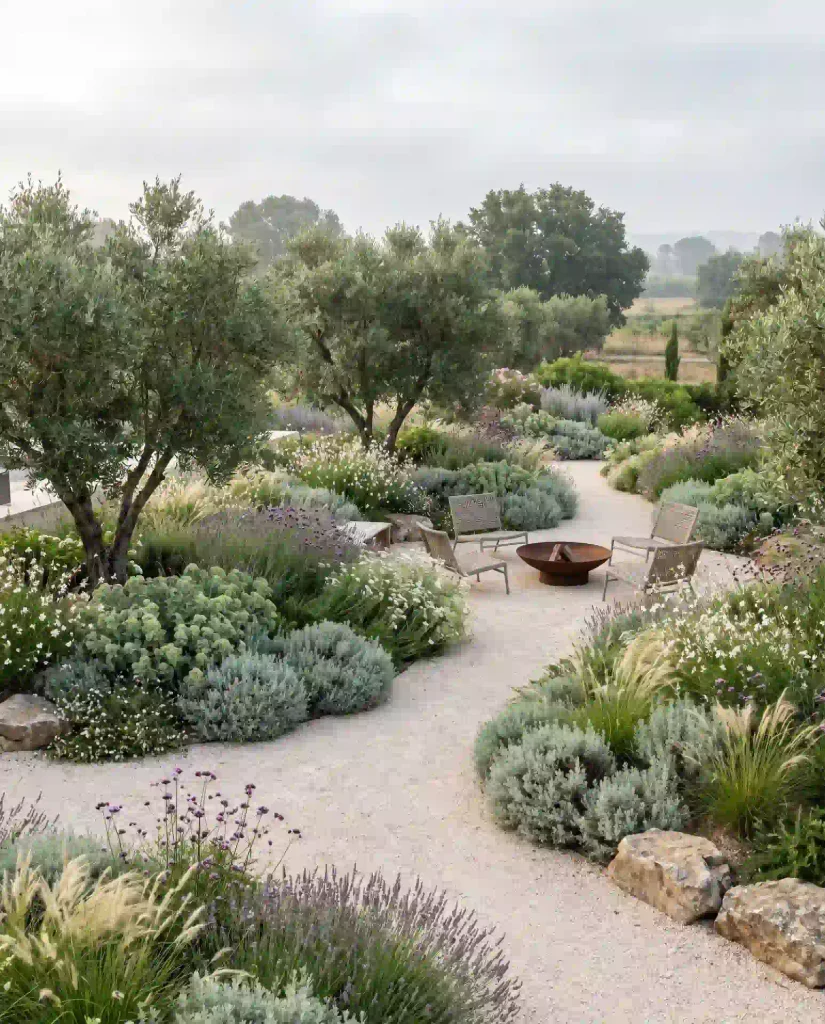
Silvery olive trees, soft lavender borders, white flowering perennials, and golden ornamental grasses surround a sweeping pale gravel pathway. Rounded grey-green shrubs and scattered natural boulders create beautiful planting layers, while a small seating area with four woven chairs and a rustic fire bowl provides a welcoming garden retreat.
The restrained palette of silver, sage green, cream, and muted purple gives this Mediterranean garden a peaceful, naturalistic character. Repeated plant groupings create a flowing landscape, and the olive trees add sculptural height without blocking the open countryside views.
Recreate this garden: Arrange drought-tolerant shrubs in generous groups rather than planting single specimens throughout the border. Position taller grasses behind low silver-leaved plants, leaving enough space for their mature spread.
For long-term success, choose plants suited to your local climate, use well-drained soil, and keep foliage a safe distance from the fire bowl.
16. Cypress-Lined Mediterranean Gravel Pathway

Tall, slender Italian cypress trees rise above a broad pale gravel pathway, creating a striking sense of symmetry and depth. Soft purple flowering perennials, golden ornamental grasses, silvery shrubs, and delicate pink and yellow blooms fill the borders, while olive trees and mature pines provide a rich green backdrop.
Why this garden works: The strong vertical lines of the cypress trees balance the loose, naturalistic planting below. Repeated clusters of purple flowers and feathery grasses soften the formal pathway, while warm gravel and subtle landscape lighting give the garden an elegant Mediterranean character.
Planting tip: Position Italian cypress trees in sunny locations with well-drained soil, allowing space for their mature height and width. In colder or wetter climates, choose locally hardy upright evergreens for a similar architectural effect.
- Color pairing: Combine lavender-purple salvias, yellow-flowering perennials, and silver-leaved shrubs for a soft, sun-loving palette.
- Design detail: Keep the pathway wide and the planting edges gently flowing to maintain a spacious, welcoming atmosphere.
17. A Coastal Mediterranean Garden Terrace
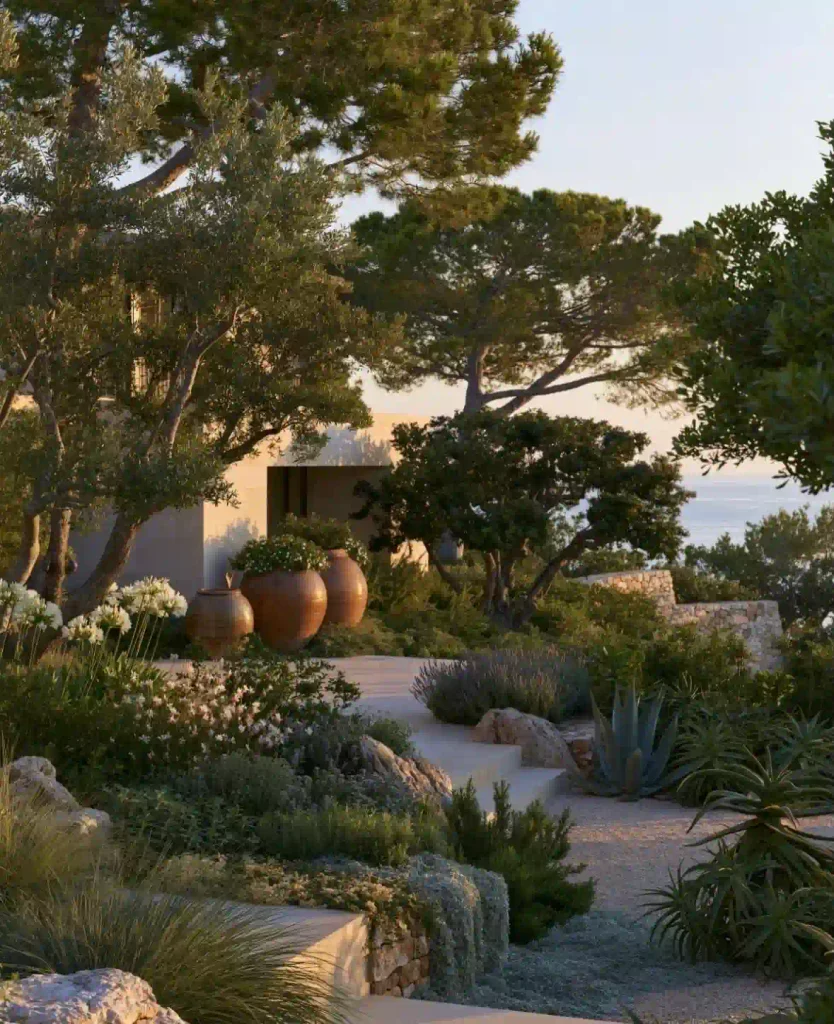
Sculptural olive trees, broad-canopied pines, oversized terracotta urns, and silvery-green shrubs create a peaceful Mediterranean garden overlooking the sea. Pale stone steps wind between natural boulders, soft ornamental grasses, lavender-toned flowers, and striking agave-like succulents, while delicate white blooms brighten the planting.
The beauty of this garden comes from its natural layers. Mature trees provide height and filtered shade, while low-growing plants soften the stone edges. Warm terracotta, sandy gravel, and weathered limestone complement the coastal setting without competing with the greenery.
Planting note: Use drought-tolerant shrubs and succulents in sunny, well-drained areas, but select shade-tolerant plants beneath dense tree canopies. Allow generous space around mature roots and keep drainage clear along the stone steps.
Finishing touch: Group large terracotta pots near entrances or seating areas to create elegant focal points without adding more planting beds.